When she sees my white skin, she presses her fat face into her mother's breasts and shakes her head. She hides and waits. But I do not go away.
She does not sense a threat, but I look strange and it startles her. She waits a few breaths longer, and then her tiny shoulders relax and her head creaks to the right, allowing one eye to look while protecting the second.
It is as if I can hear this 1-year-old child's thoughts: "I was named after a ‘Mzungu‘, a white person? This is Aimee?"
I answer her thoughts with a smile.
She was born last year, when I visited the Kyangwali Refugee Camp in eastern Uganda to write a news article about humanitarian aid. Her mother, who I had interviewed, went into labor as my taxi pulled away. When I found out though e-mail they named her after me, I promised to return for her first birthday.
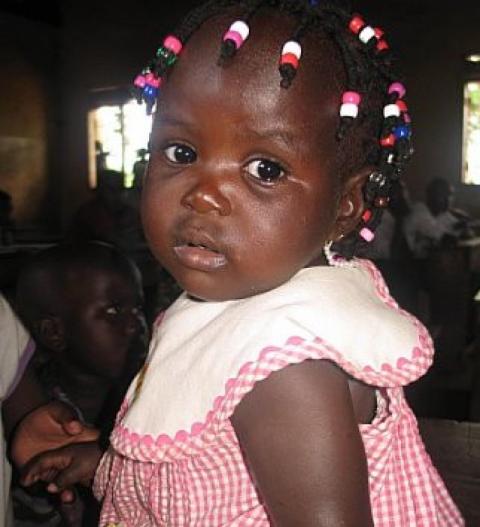
She is in my arms now, on my lap facing away from me. Her tight, tiny black braids stick out like spiders from her head. She is sucking on her dirty baby fingers, wearing a pink gingham dress my mother picked out at Target back home. Baby Aimee is humming, or maybe crying a little because she is suffering from malaria, again.
Her body is heavy with fever, and it makes my heart heavy, too. I know back at the camp in my backpack I have an envelope of $50, emergency cash I brought on my trip. Back home, the money could buy me new shoes, or pay my long overdue electric bill. But here, it could save my goddaughter's life, again and again. This small amount of money makes me feel like a superhero. I look malaria in the face and scoff arrogantly.
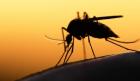
This stupid mosquito-borne disease is not only treatable, but preventable. Yet it takes an estimated one child's life every 30 seconds in Africa. Inexcusable deaths. I feel movement over my left shoulder. My eyes leave Baby Aimee for a moment, and they skip over a crowd of faces staring at me in curious silence. Bodies of dirty refugee children push through the glassless window. My eyes stop on the eerie yellow eyes of one boy: he has malaria, too. I notice another set of malaria eyes. And another. Suddenly, I feel like I am spinning.
I jerk back to look at the baby on my lap. She plucks one sticky finger out of her mouth and waves it distractedly through the air, like she is conducting the galaxy of mosquitoes and red dust particles in the classroom where we sit. Without the finger plugs, her hum is a little louder. She leans back gently against my chest and I pull her tighter. I can see her sweaty dark cheeks from above, and how her forehead sticks out farther than her chin. Her lashes sweep through the air like black birds. This silly baby, this sticky, sweaty, sick human humming and sucking on her fingers is the most beautiful thing I have ever seen.
I ignore the other eyes drilling through the back of my head. I have to.
"I will protect you, baby. Nothing will ever hurt you."
Then I start to cry.